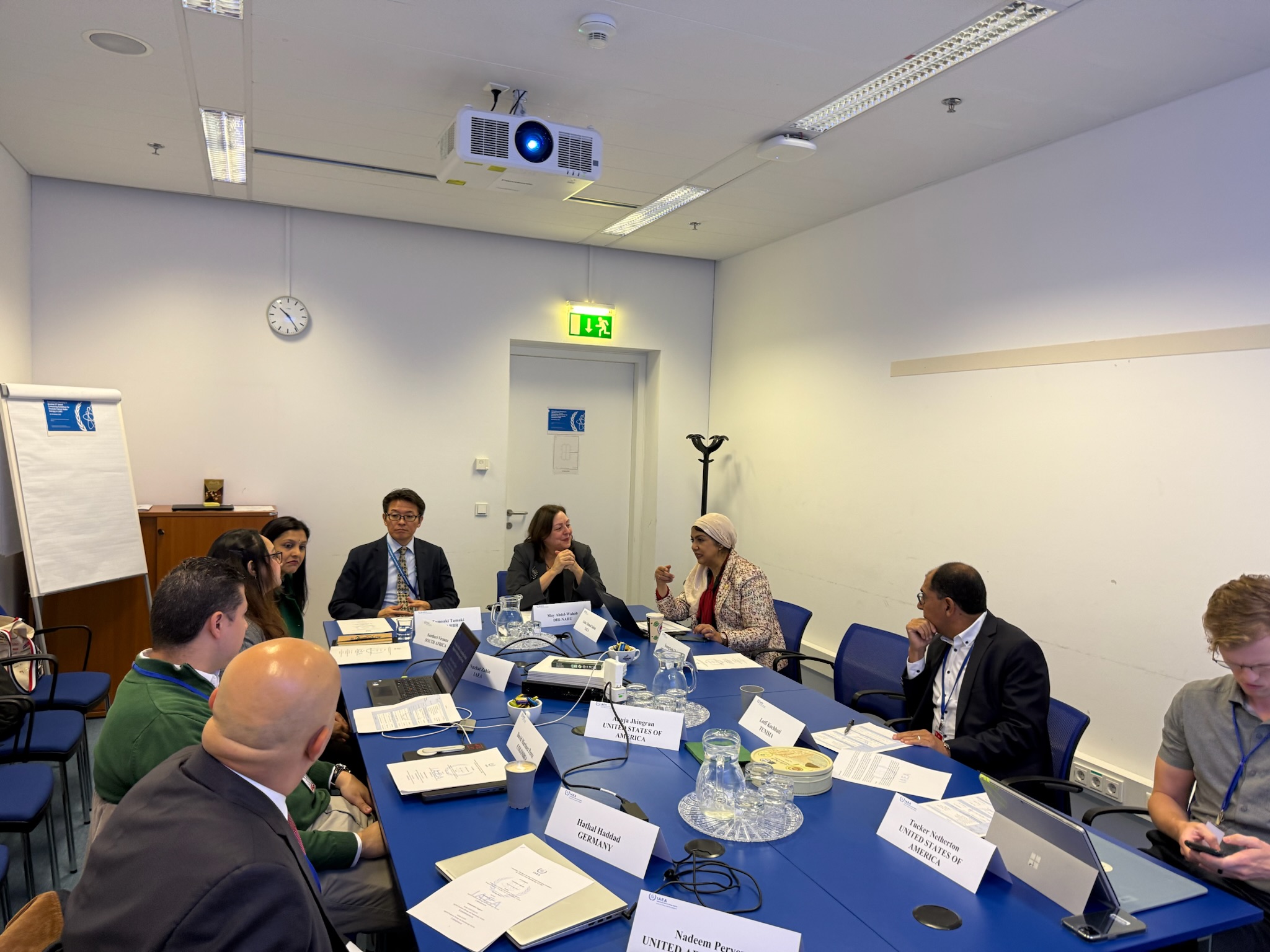
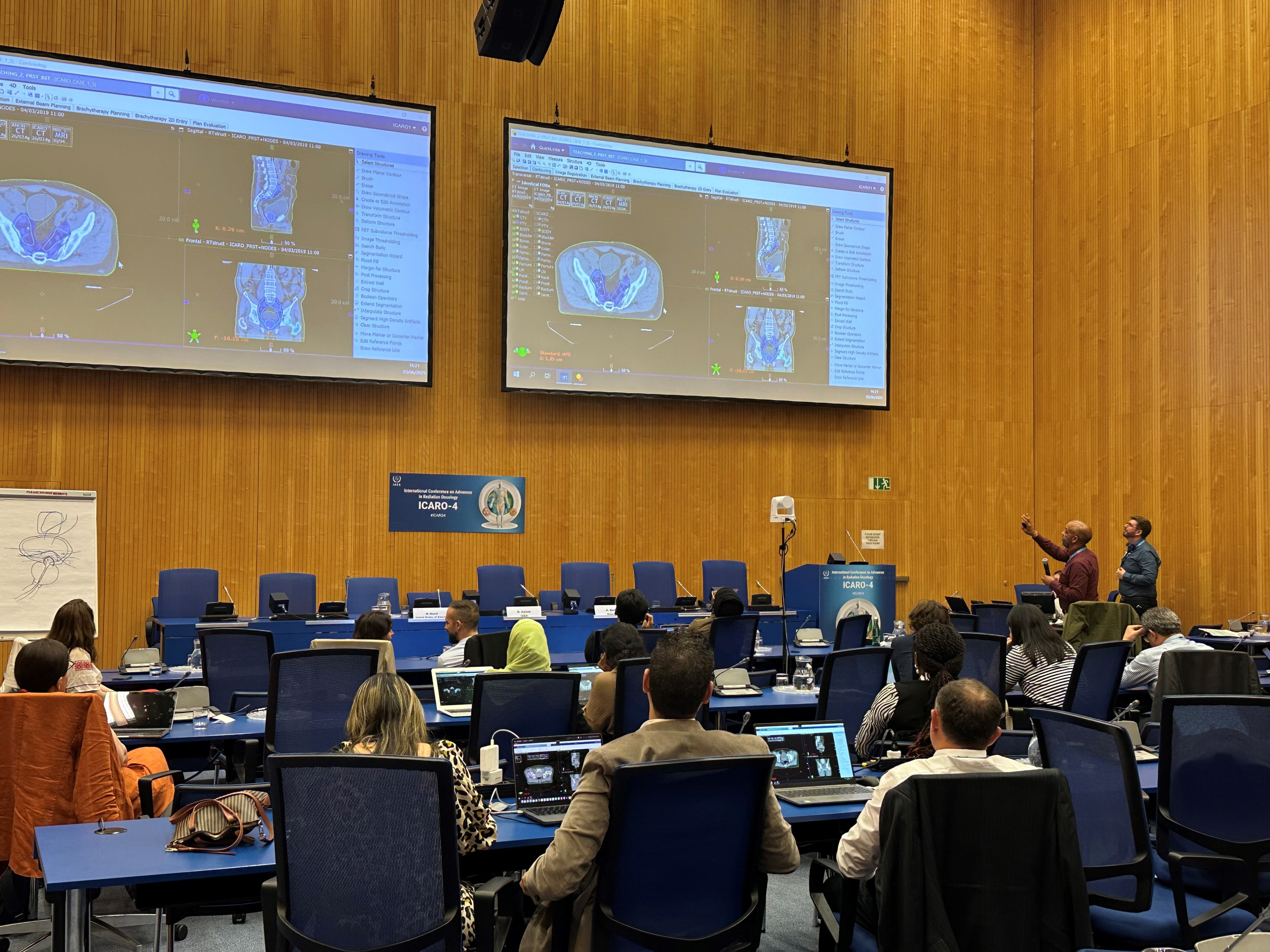
The IAEA is launching a year-long coordinated research project to develop computed tomography-based guidelines on prostate cancer contouring — a critical step in the cancer treatment process that guides the effective delivery of radiation therapy. Under this project, researchers from around the world will also create and test an automated, artificial intelligence-based contouring tool.
With nearly 1.5 million new cases and 400 000 deaths in 2022, prostate cancer is the world’s fourth most common cancer and the eighth leading cause of cancer-related death. Among men, the disease ranks second in terms of incidence and fifth in terms of mortality. Longer life expectancy and changing age structures are expected to contribute to a rise in prostate cancer, with more than 1.37 million new cases projected in 2050 in low- and middle-income countries alone.
“For men with non-metastatic prostate cancer, radiation therapy constitutes a cornerstone of curative treatment,” said May Abdel-Wahab, Director of the IAEA Division of Human Health. Yet despite the importance of medical imaging in the care these patients receive, the Lancet Oncology Commission on Medical Imaging and Nuclear Medicine has highlighted a global disparity in equipment availability: one magnetic resonance imaging (MRI) scanner serves roughly 5.6 million people in low-income countries and 145 000 people in middle-income countries.
“With roughly three times as many computed tomography (CT) scanners in low- and middle-income countries than MRI machines, radiotherapy services in these contexts still predominantly rely on CT-based planning,” Abdel-Wahab said. “Navigating these imaging equipment challenges affects contouring quality.”
“In terms of clinical practice, this translates to inferior soft tissue contrast, adds to the difficulty of accurately delineating the prostate gland, and can lead to inter-physician variability in treatment planning,” said Seungtaek Choi, professor of genitourinary radiation oncology at the University of Texas MD Anderson Cancer Center, an IAEA Collaborating Centre in Human Health. “Overestimated contouring volumes in turn impact both treatment precision and patient outcomes.”