• <menu id="888u4"><menu id="888u4"></menu></menu>
  • Infectious Diseases

    61-2

    Jan, 2026
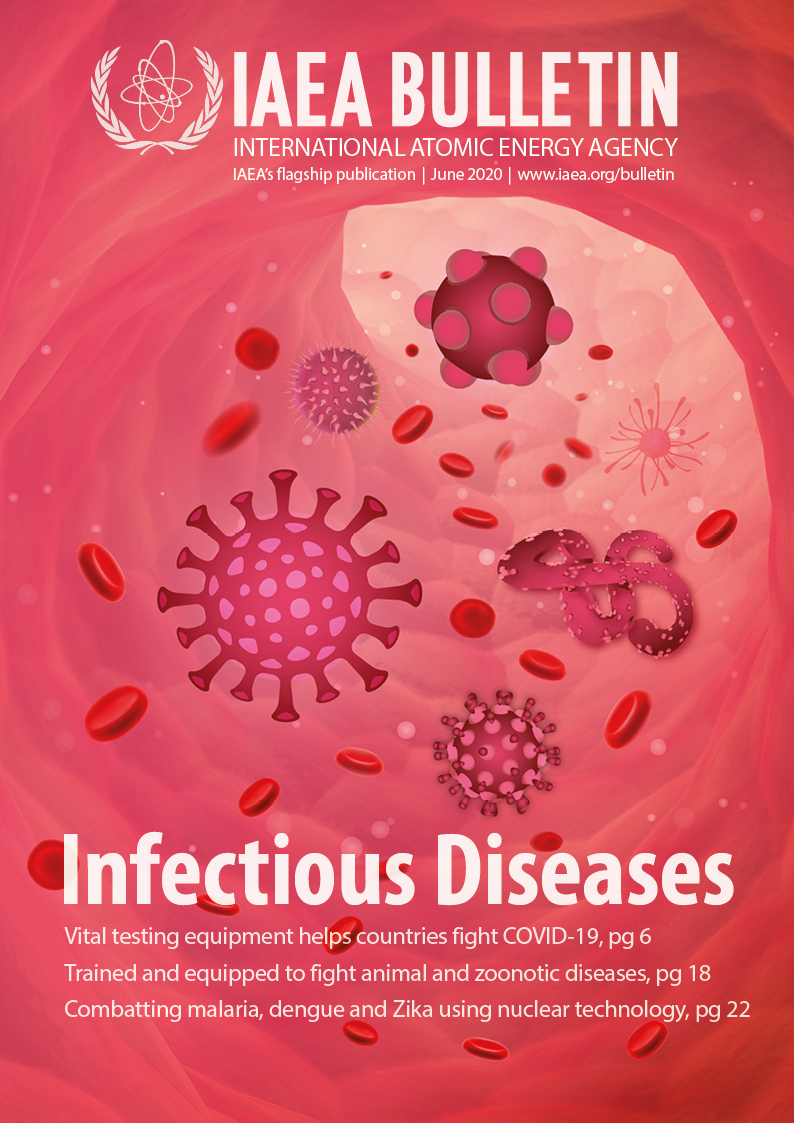
    In this edition of the IAEA Bulletin, you will learn about infectious diseases more generally and how countries work with the IAEA to build their capacity to deal with them. In Sierra Leone, for example, specialists are drawing on IAEA expertise to test whether bats are infected with the Ebola virus. In Latin America and the Caribbean, IAEA support is helping countries deal with malaria, dengue and Zika as well as the mosquitoes that spread these devastating illnesses.

    Pre-empting and preventing infectious disease outbreaks

    Infectious Diseases and How Nuclear Science Can Help

    Vital testing equipment helps countries fight COVID-19

    How is the COVID-19 virus detected using real time RT–PCR?

    A Window Inside the Body and COVID-19

    Overcoming the Unknowns of COVID-19

    Trained and equipped to fight animal and zoonotic diseases

    Hunting for viruses in Sierra Leone with the help of nuclear technology

    Combatting Malaria, Dengue and Zika Using Nuclear Technology

    Vietnamese authorities control the spread of African swine fever with the use of nuclear-derived techniques

    Bulgaria stops the spread of animal disease with the help of the IAEA and FAO

    Morocco controls foot-and-mouth disease with the help of nuclear-derived methods

    Irradiated animal vaccines keep Ethiopia’s animals healthy, helping exports and food security

    We need a global response to the pandemic threat

    A global victory against COVID-19 requires creative partnerships

    Belarus receives IAEA equipment to assess radiological threats associated with forest fires

    IAEA News Story

    Drought-tolerant crops: IAEA and FAO help Zambia improve production and farmers’ income

    IAEA News Story

    IAEA provides standards to help laboratories measure changes in the environment

    IAEA News Story
    午夜爱爱爱爱爽爽爽视频网站