
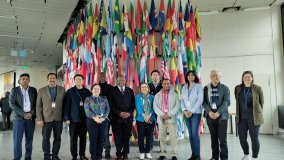
Harnessing Science and Partnerships to Transform the Millet Sector: A Global Research Effort
Millets thrive on arid lands, require minimal inputs, and are highly tolerant to climate variability—making them a sustainable solution for enhancing self-sufficiency and reducing reliance on imported cereals.
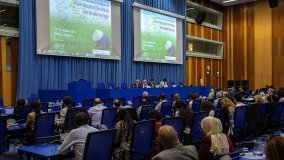
Mutation Breeding of Rice Increases Food Security across Asia
The use of radiation in improving crop varieties offers an effective means of adapting agricultural crops to changing weather conditions, while also increasing yields to feed a growing population, agreed speakers at a session at the International Symposium on Plant Mutation Breeding and Biotechnology yesterday.
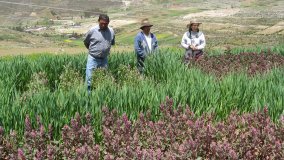
Quinoa Farmers Increase Yields Using Nuclear-Derived Farming Practices
Although it was domesticated five millennia ago, quinoa is one of those foods that was practically unknown outside of Peruvian highlands until very recently when nutrition-conscious consumers learned of its richness in proteins, amino acids, fatty acids, vitamins and minerals.

How Nuclear Science Helps Improve Food
Over 400 experts from around the world are at the IAEA headquarters to take part in the International Symposium on Plant Mutation Breeding and Biotechnology. Nuclear techniques can be used to generate...
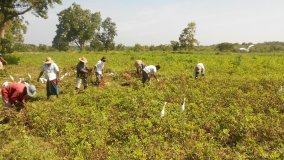
Sri Lankan Farmers Benefit from Mutation Bred Groundnut for 25 Years
In Sri Lanka, where agriculture is the most important sector of the economy, nearly 82 percent of the population lives in rural areas and agriculture accounts for 30 percent of national employment.