• <menu id="888u4"><menu id="888u4"></menu></menu>
  • Driving Industrial Innovation: Brazil’s Mobile Electron Beam Accelerator

    Brazilian counterparts from IPEN/CNEN joined the IAEA in showcasing the benefits of the mobile unit to the public at a dedicated event in Brazil. (Photo: K. Vargas / IAEA).

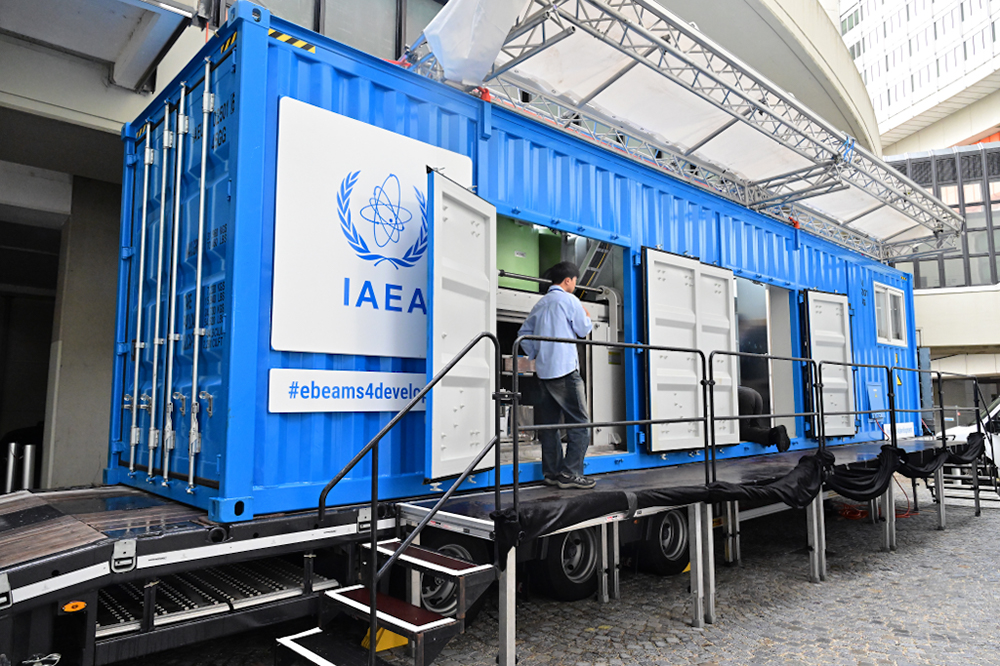
    A state-of-the-art mobile electron beam accelerator unit is now operational and ready to provide on-site services on a pilot basis in Brazil. Housed inside a truck, the e-beam accelerator can travel across the country, to treat industrial wastewater from manufacturers and petrochemical plants, removing toxic chemicals and making it possible to reuse water. 

    “This excellent initiative of the IAEA and the National Nuclear Energy Commission (CNEN) is already available for use in the country’s chemical and petrochemical industries, with the aim of demonstrating the effectiveness of irradiation technology in preserving the environment. We offer our full support and enthusiasm,” said Luciana Santos, Minister of Science, Technology and Innovation of Brazil. 

    What are Electron Beams Used For?

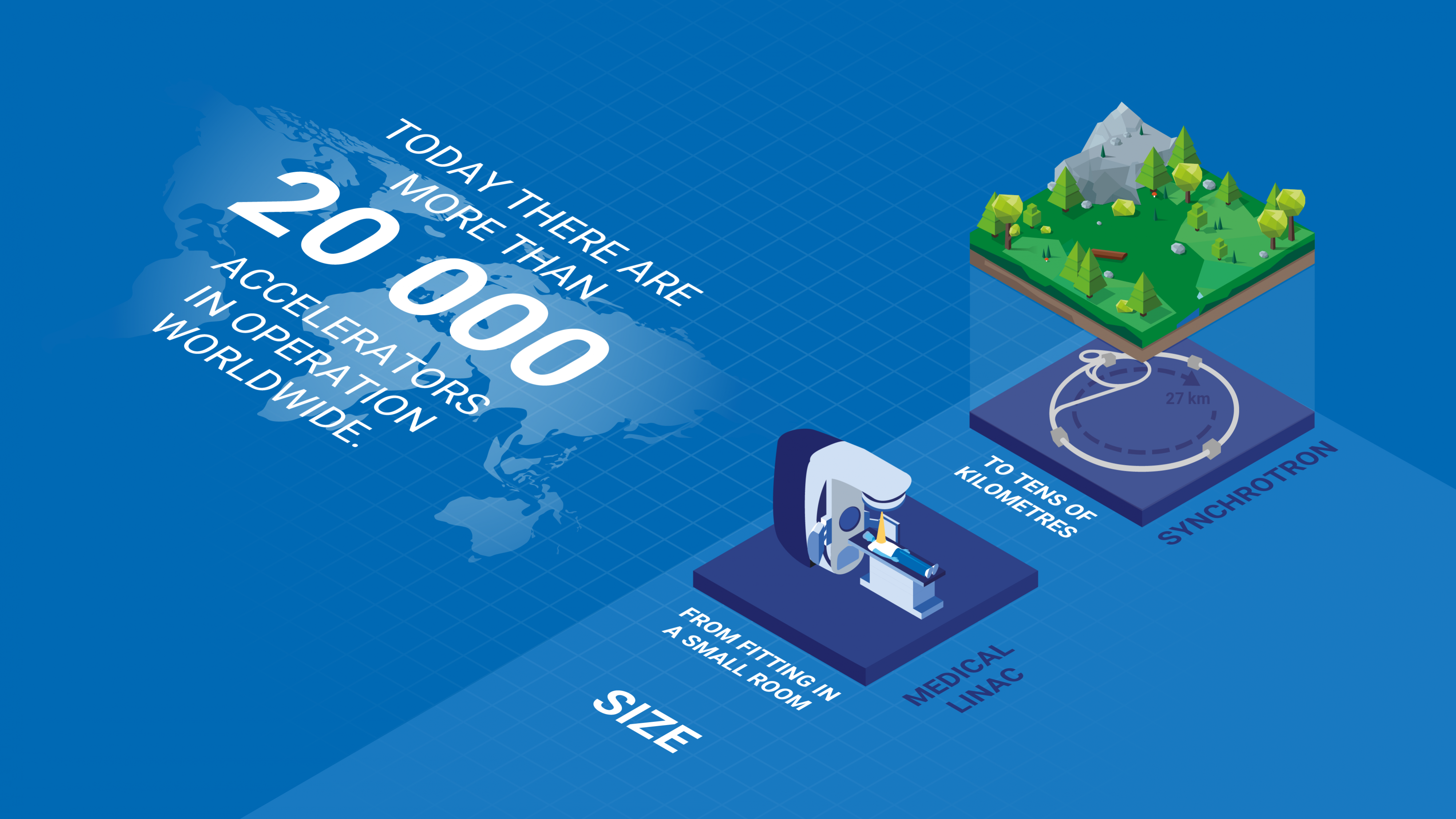
    Electron beam systems are a type of particle accelerator. They produce ionizing radiation to modify the physical, chemical, and biological properties of materials. 

    E-beams are commonly used in industry, medicine and scientific research. Along with gamma and X ray irradiation, e-beams are widely used for sterilizing medical products, for the safety of food items and for preserving cultural artefacts. As e-beams can help make materials more durable in extreme temperatures or resistant against chemicals, they are also used in the automotive and aerospace industries. There is also growing interest in applying e-beams for treating wastewater and sludge, and for mitigating greenhouse gases. 

    A state-of-the-art mobile electron beam accelerator is now operating in Brazil. (Photo: B.Wendhausen/ CNEN).

    Wastewater Treatment

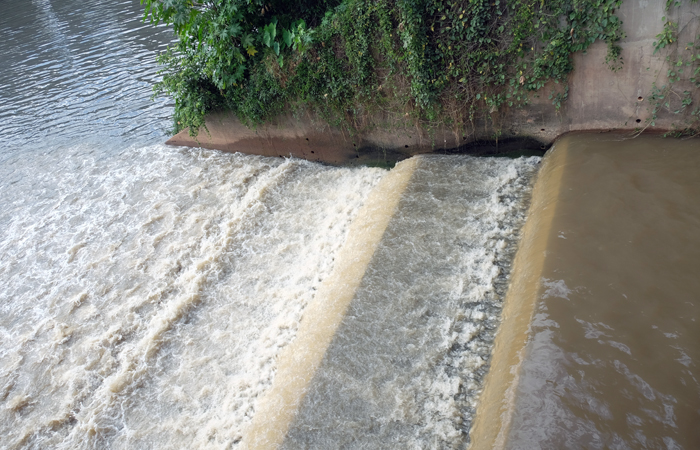
    Electron beam treatment of wastewater is highly effective, but still relatively unknown in many industrial sectors. To increase the awareness of this application, Brazil has made the unit mobile, with support from the Republic of Korea. Worldwide, only a handful of transportable e-beam accelerators are in use for industrial applications. The truck-mounted accelerator will be able to visit industrial sites around the country with ease – showcasing how e-beam irradiation can solve wastewater challenges and providing an opportunity for in-person training. The mobile irradiator has already been tested for various applications in chemical, oil, and sanitation sectors, such as S?o Paulo Sanitation Company and Petrobras. It has also been used for training purposes including with the National Industrial Apprenticeship Service.  

    “Together, we developed the mobile unit, which uses nuclear technology — an e-beam accelerator — to degrade organic compounds in wastewater,” said Wilson Calvo, Director of Research and Development, CNEN. “The main proposal is to reuse this water, for example from clothing production or industrial applications,” he said. 

    The unit, equipped with a 700 keV, 28.5 mA and 20 kW industrial electron accelerator, was established by the Nuclear and Energy Research Institute (IPEN), which is part of CNEN, supported by the IAEA technical cooperation programme, the Brazilian Innovation Agency, the National Research Council and Truckvan. Wastewater flows directly through the unit, where it is irradiated by the e-beam accelerator. This breaks down toxins and makes any additional conventional treatments more efficient. Up to 1000 cubic metres of wastewater can be treated every day.  

    Decade of Collaboration with Brazil

    The mobile unit is the result of over a decade of collaboration between the IAEA and Brazil in radiation technology. In 2015, through a previous technical cooperation project, IPEN scientists analysed how best to remove toxic chemicals from textile production wastewater at the IPEN e-beam irradiation facility in Brazil. The IAEA technical cooperation programme provided equipment, including an Ultraviolet Visible Spectrophotometer and Gas Chromatograph Mass Spectrometer, to help scientists detect pollutants in water samples to determine the efficacy of the e-beam treatment. Through support for industrial wastewater treatment, the IAEA helps countries improve water quality and protect the environment for future generations. 

    “This mobile unit demonstrates what sustained partnership can achieve. By combining national expertise with IAEA support, we are delivering a practical solution that helps industries reduce pollution and protect vital water resources across Brazil. This impactful experience will be shared, through the IAEA technical cooperation programme, within the Latin American and the Caribbean region, as well as internationally,” said Raul Ramirez, Section Head, IAEA Department of Technical Cooperation. 

    Brazil’s mobile accelerator demonstrates how bringing irradiation technology directly to users helps industries assess feasibility, build technical capacity and explore applications before investing in permanent facilities.  

    The initiative aligns with the IAEA’s broader work to expand access to electron beam technologies and demonstrate their value for industry and environmental protection. In September 2025, the IAEA launched a new transportable electron beam system at its laboratories in Seibersdorf, Austria, which can be loaned to countries to support experiments and capacity building. By lowering barriers to access and providing hands-on training, the IAEA supports countries in building technical expertise and accelerating the safe adoption of e-beam technology. 

    (Photo: B.Wendhausen/ CNEN).

    Related resources

    午夜爱爱爱爱爽爽爽视频网站