• <menu id="888u4"><menu id="888u4"></menu></menu>
  • IAEA Launches Global Webinar Series on Artificial Intelligence for Medical Physicists

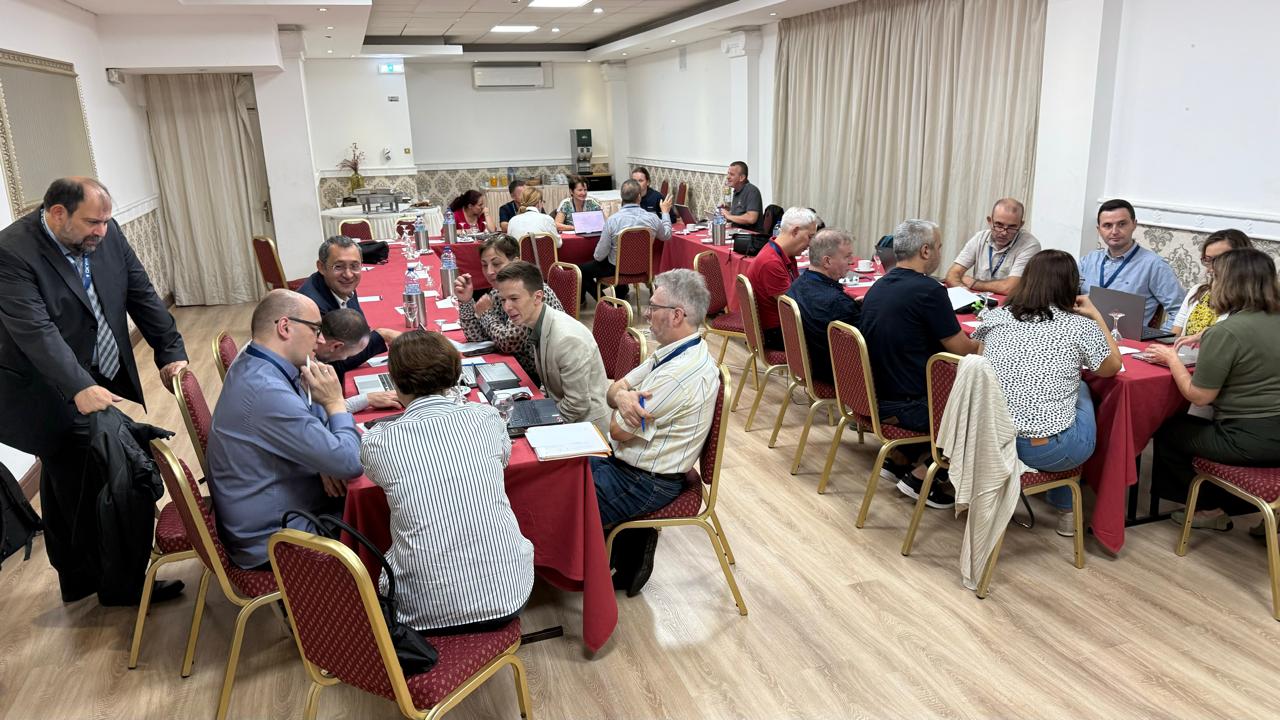
    The IAEA has been training medical physicists around the world to support countries in the safely and effectively integrating of AI systems into clinical practice. (Photo: O. Ciraj Bjelac/IAEA)

    The IAEA has launched a six-month global webinar series on artificial intelligence in radiation medicine, drawing over 3200 registrants worldwide to navigate the evolving landscape of artificial intelligence for the role of medical physicists. 

    “We had a record number of registrations for the session[s] and for the whole series, which really highlights the growing interest in the artificial intelligence (AI) topic and the importance of sharing knowledge across our community,” noted Ioannis Delakis — a medical physicist at Queensland Health in Australia and the lead country coordinator for a regional technical cooperation project on medical physics in the Asia Pacific — during the inaugural webinar on 14 October. 

    Strengthening Skills for AI in Radiation Medicine

    “As the integration of AI into medical imaging and radiation therapy continues to grow, ensuring the safe and effective implementation of AI-based systems is critical,” explained Olivera Ciraj Bjelac, an IAEA medical physicist and one of the technical officers leading the new webinar series. “For their part, medical physicists play a central role in realising the benefits of AI-based systems for patients and healthcare systems. Within multidisciplinary teams of health professionals, they support the clinical implementation and validation of the AI systems in clinical environments.” 

    To support medical physicists across the globe, the IAEA’s human health programme has published guidance on the roles, responsibilities, education and training of these professionals. It has also conducted workshops with the Abdus Salam International Centre for Theoretical Physics (ICTP), continues to develop additional guidance and will soon publish guidelines for medical physicists on the clinical implementation of medical imaging-based AI systems.

    A New Resource: AI Webinar Series

    Building on these public resources, the IAEA designed a dedicated 12-part webinar series to equip medical physicists with the knowledge and skills needed to introduce imaging-based AI systems into clinical practice. Organized by the IAEA’s human health and technical cooperation programmes under a dedicated regional project on improving the quality and safety of radiology services through medical physics.

    The online sessions take place every two weeks from October 2025 to April 2026. Experts from Germany, India, the Netherlands, and the United States of America are leading interactive presentations and live discussions on: 

    • Introduction to AI: its historical background and terminology
    • Roles and responsibilities of medical physicists in AI
    • Basic and advanced statistical methods
    • Ethical and regulatory considerations relevant to AI systems
    • Machine learning models, training and validation
    • Deep-learning architecture
    • Data management
    • Clinical implementation of imaging-based AI systems
    • Diagnostic radiology procedures utilizing AI
    • Imaging-based AI systems in radiotherapy
    • Radiomics for medical physicists
    • Medical physicists’ roles in the clinical validation of AI technologies in imaging

    At the conclusion of the series, attendees are expected to promote the safe, efficient, ethical and responsible use of AI. 

    “Participating in the IAEA AI webinar series has deepened my understanding of how medical physicists can lead the safe and effective integration of AI into clinical practice,” reflected Noramaliza Mohd Noor, associate professor and medical physicist at Universiti Putra Malaysia. “The sessions have broadened my perspective on the future of our field and strengthened my commitment to enhancing patient-centred care through innovation.”

    How to Join

    Interested attendees can register for the webinar series by registering on the IAEA Human Health Campus. Recordings of the presentations delivered during each session will also be uploaded to the Campus platform, where they will be available on demand.

    Looking ahead: IDOS2026

    AI in dosimetry, among other topics, will be discussed at the IAEA’s upcoming International Symposium on Standards, Applications and Quality Assurance in Medial Radiation Dosimetry (IDOS 2026), to be held in Vienna, Austria from 5 to 9 October 2026. Medical physicists, radiation metrologists as well as other scientists and researchers working in radiation dosimetry are invited to submit an abstract by 2 April 2026.

    午夜爱爱爱爱爽爽爽视频网站