
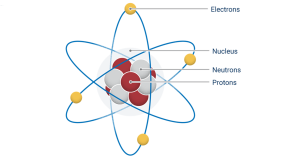
What is an Atom?
Atoms are the building blocks of matter. Everything around us — from air and water, to rocks, plants and animals — as well as everything within our bodies, is made up of atoms....
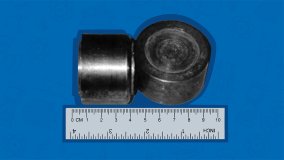
What are Radioactive Sources?
Radioactive sources contain radioactive material of a particular radionuclide (an unstable form of an element emitting radiation), which can vary based on the application for which the source was manufactured.

What Are Particle Accelerators?
Particle accelerators produce and accelerate beams of charged particles, such as electrons, protons and ions, of atomic and sub-atomic size. They are used not only in fundamental research for an improved understanding of matter, but also in plethora of socioeconomic applications related to health, environmental monitoring, food quality, energy and aerospace technologies, and others.
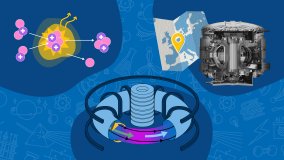
What is Nuclear Fusion?
Nuclear fusion is the process by which two light atomic nuclei combine to form a single heavier one while releasing massive amounts of energy.
Fusion reactions take place in a state of matter called plasma — a hot, charged gas made of positive ions and free-moving electrons with unique properties distinct from solids, liquids or gases.

Studying and Preserving Cultural Heritage Using Nuclear Science and Technology
Nuclear science and technology are often used in the study and preservation of valuable cultural objects. These objects include everything from paintings, clothing and musical instruments, to statues, arms and armour — even Egyptian mummies and an entire ancient wooden ship.