
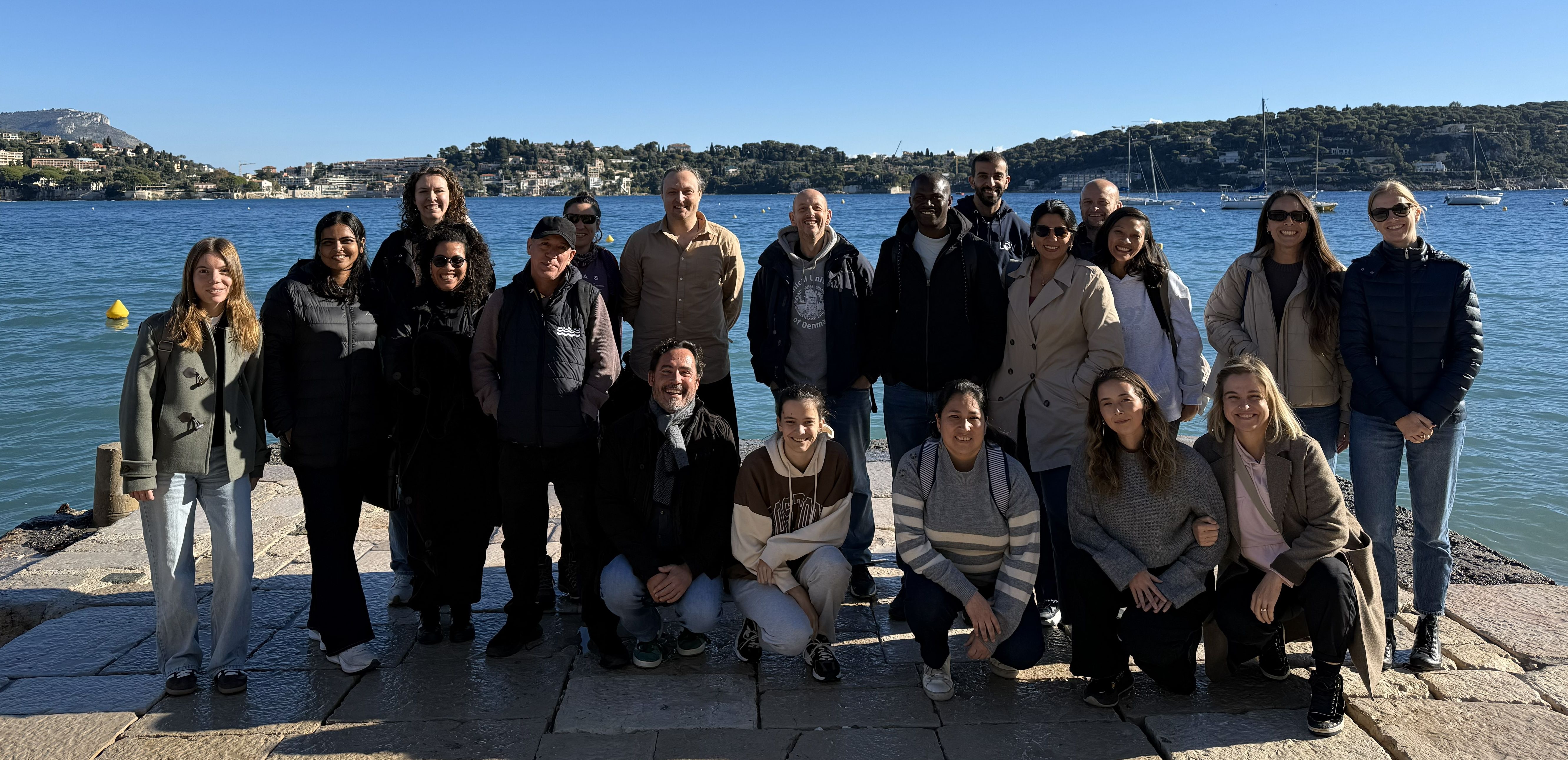
The Third Winter School on Ocean Acidification and Multiple Stressors was part of the capacity building program of the OA-ICC. The program aims to provide with a thorough understanding about key concepts and experimental design used to study the impacts of ocean acidification in the context of additional stressors.
Ocean acidification is a global environmental stressor that threatens marine life and the livelihoods of coastal communities. Ocean acidification is caused by increasing atmospheric carbon dioxide being absorbed by the ocean, resulting in changes to seawater carbonate chemistry, including a drop in pH. Due to global concerns about its consequences, ocean acidification is included in international policies such as Target 3 of UN Sustainable Development Goal (SDG) 14 and Target 8 of the Global Biodiversity Framework (GBF).
Ocean acidification is not happening in isolation, but in combination with other human-driven pressures, including pollution, warming, and oxygen loss. The impact of multiple ocean stressors on marine life and ecosystem function is not well understood, yet this information is crucial to inform adaptation strategies that might minimize negative effects on organisms, ecosystems, and associated socioeconomic benefits.
The IAEA’s Ocean Acidification International Coordination Centre (OA-ICC) supports IAEA Member States to minimize and adapt to OA and report towards SDG 14.3 and the GBF, with a strong focus on building capacity to study ocean acidification and related stressors and promoting international collaboration and coordination.
The course brought together 14 participants from the following countries: Argentina, Brazil, Colombia, Cuba, India, Italy, Peru, Poland, Portugal, South Africa, Spain, the UK and the USA. The aim of the Winter School was to train early-career scientists who already have experience researching ocean acidification on how to study acidification in the context of other co-occurring stressors. Through lectures and practical exercises in the laboratory, the students gained understanding of key concepts in multiple-stressor research (e.g., What is a stressor? What is a mode of action? What is an interaction?), purposeful experimental design, and analysis of complex datasets. During the course, participants collaborated on a joint laboratory experiment to elucidate the effects of three simultaneous drivers on marine organisms.
The course was organized by the IAEA / OA-ICC in partnership with the Prince Albert II of Monaco Foundation.